Our Mission:
IndyFeral seeks to reduce the unowned stray and feral (wild) cat overpopulation through the non-lethal method of Trap-Neuter-Return (TNR), not trap and kill.
Veterinary Guidelines: Working with Feral Cats
 
... ...

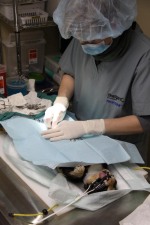
cat in surgery at a spay day clinic

"Veterinarians play a critical role in the humane care of feral cats. By performing the medical portion of Trap-Neuter-Return, you help to improve the cats’ lives. Although feral cats are the same species as the cats who regularly come into your practice, feral cats require a special veterinary approach that takes into account their unique needs and the fact that they are unsocialized to humans. For Trap-Neuter-Return to be successful, veterinarians must be educated about, and comfortable with, the specific methods and procedures necessary to provide appropriate care for feral cats."
~ Alley Cat Allies

... ...

National Resources

... ...

Below are resources which will help veterinary professionals learn more about protocols designed specifically for treating feral cats.

Alley Cat Allies has a comprehensive guide to feral cat veterinary care, which contains complete and detailed protocols for veterinary care of feral cats intended for veterinary care professionals.

Alley Cat Allies' Feral Friends network: Locate a veterinarian or clinic in your area experienced with handling and treating feral cats.

Feral Cat Spay Neuter Project - (A Petsmart Charities national mentoring organization), offers resources for operating a feral cat clinic and specific veterinary protocals for treating feral cats.
... ...

Indiana Resources

... ...

For veterinarians/techs seeking assistance with clinic training/protocols/education specific to feral cats:

Carolyn Kacocha, DVM
IndyFeral's Medical Director

Veterinary School: Purdue University

Dr. Carolyn Kacocha graduated from Purdue University in 2000. After graduation, she worked at a 24 hour emergency clinic in Louisville, KY. While working in Louisville she volunteered for Alley Cat Advocates, the local Trap-Neuter-Return (TNR) group and the Woodstock Animal Foundation for 5 years before returning to the Indianapolis area. She currently works as an associate veterinarian at VCA Swengel Animal Hospital. She enjoys spending time with her dog Toby and her 5 cats. Her hobbies include knitting, reading and spending time outdoors. In her capacity as medical director, Dr. Kacocha provides oversight for the IndyFeral clinic and the medical treatment for any cat requiring long-term care.

Contact Dr. Kacocha at: Send an email to IndyFeral at and your message will be forwarded to Dr. Kacocha.

Pam Carpenter, DVM
Low Cost Spay Neuter Clinic

Veterinary School: Purdue University

The Low Cost Spay Neuter Clinic offers a standard feral cat package which includes treatment of minor injuries and illnesses. The clinic features "best practices" in the handling and treatment for feral cats.

Contact Dr. Carpenter via Tammy Sollenberger, Executive Director of the Low Cost Spay Neuter Clinic
ts@lowcostclinic.org
(317) 706-0537

Nancy Ferguson, DVM, CVA
Trainer/Educator, Humane Alliance, (NSNRT) National Spay/Neuter Response Team

humanealliance.org

Contact Dr. Ferguson at:
SPOT (Stop Pet Overpopulation Today) Clinic
SeeSpot.org
612 S. Main St, Cloverdale, IN 46201
spayaday@aol.com
1-765-795-4336

For public health/rabies issues regarding TNR programs for the State of Indiana:

Trap-Neuter-Return (TNR) Programs Protect Public Health
Rabies in companion animals

Sandra Norman, DVM
Director, Companion Animal/Equine
Indiana State Board of Animal Health
805 Beachway Dr. Suite 50
Indianapolis, IN 46224
snorman@boah.in.gov
317-227-0323
877-747-3038 toll free

... ...

Related Articles

... ...
  • Caring for Feral Cats in the Clinic by Nancy Peterson for Veterinary Technicians Journal, August 2006

    This article by Nancy Peterson, the Cats Program Manager for the Humane Society of the United States, provides a detailed overview of how to properly handle and provide care for feral cats in a clinic environment.

  • Eartipping Instructions Quick Guide.

    Eartipping provides a critical visual indication that a cat has already been spayed/neutered. As these instructions show, it is a simple procedure done while the cat is anesthetized for spay/neuter.

  • Feral Cat management by Dr. Julie Levy

    An overview of the feral cat population, TNR, and feral cat protocols.

... ...